Top 10 Ice Cream Manufacturers in India: A Comprehensive Industry Analysis
India’s ice cream industry represents one of the fastest-growing segments in the country’s food processing sector, valued at approximately USD 3.46 billion in 2024 and projected to reach USD 14 billion by 20341. Despite having a relatively low per capita consumption of 400ml compared to 22,000ml in the United States, the Indian market shows tremendous potential for growth. The industry is moderately consolidated, with the top six companies accounting for 68-70% of market value, while the remaining 30-32% remains fragmented among smaller local players.
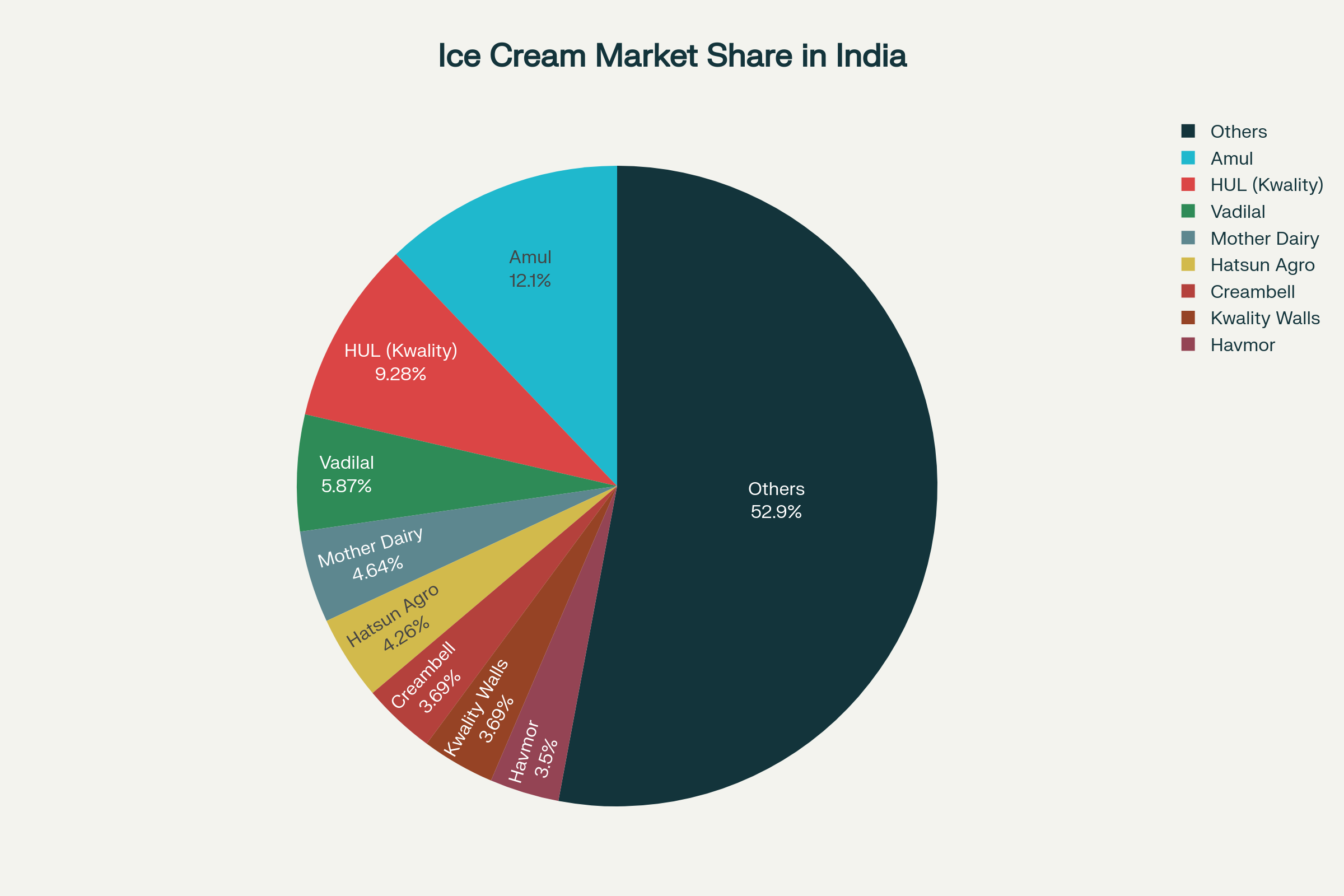
Market Share of Top Ice Cream Manufacturers in India
The Indian ice cream market is driven by rising disposable incomes, improved cold chain infrastructure, changing consumer lifestyles, and increasing urbanization. With summer temperatures rising and a growing preference for premium and innovative flavors, the industry continues to expand its reach from metropolitan cities to tier-2 and tier-3 towns across the country.
1. Amul (Gujarat Co-operative Milk Marketing Federation)
Market Position: Leading manufacturer with 12.8% market share
Manufacturing Capacity: 700,000 litres per day across 17 ice cream plants
Annual Turnover: ₹72,000 crores (USD 9 billion) for overall operations
Manufacturing Volume and Reach
Amul operates one of India’s most extensive ice cream manufacturing networks with 17 dedicated facilities across the country6. The company’s total ice cream production capacity stands at 700,000 litres per day, with facilities strategically located to serve different regional markets. Major plants include facilities in Gujarat, Haryana (Rohtak – 100,000 LPD), and other key states.
The company’s distribution network spans over 1,500 cities and towns through a vast network of distributors and retailers. Amul maintains its competitive edge through an integrated supply chain connecting 18,600 dairy cooperatives and 3.64 million farmer members.
Product Range and Flavors
Amul offers an extensive portfolio of over 200 ice cream varieties, including:
- Traditional Range: Tri-cones, cups, sticks, tubs
- Premium Categories: Sundaes, shakes, family packs
- Specialty Products: Camel milk ice cream, sugar-free variants, probiotic ice creams
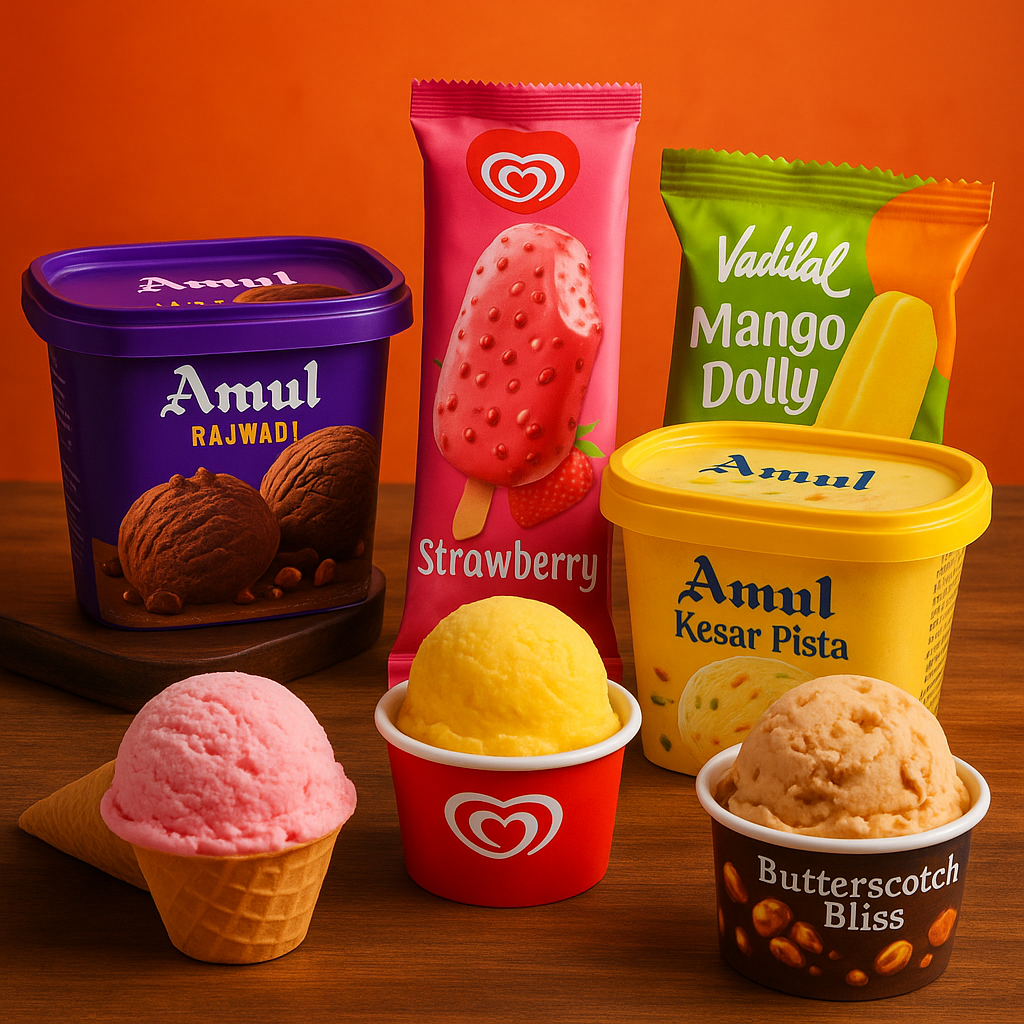
- Popular Flavors: Rajbhog, Kesar Pista, Mango, Litchi, Vanilla, Chocolate, Strawberry
Unique Propositions
- 100% Vegetarian: All ingredients including colors, stabilizers, and emulsifiers are vegetarian
- Cooperative Model: Direct farmer ownership ensuring quality milk sourcing
- Affordability: Products priced from ₹20 onwards, making premium ice cream accessible
- Innovation: First to launch camel milk ice cream in India
- “Real Milk, Real Ice Cream”: Emphasis on authentic dairy ingredients
Marketing Methods
Amul’s marketing strategy focuses on mass market penetration with emphasis on:
- Television Advertising: Strong presence across regional and national channels
- Digital Marketing: Active social media engagement and digital campaigns
- Retail Partnerships: Extensive network of general trade stores and modern retail
- Seasonal Campaigns: Targeted summer marketing initiatives
- Brand Extensions: Leveraging the trusted Amul dairy brand
Showroom Reach
- Amul Ice Cream Parlors: Over 1,500 exclusive outlets nationwide
- Retail Presence: Available in 1,500+ cities and towns
- International Presence: Exports to 60+ countries
- Premium Outlets: “Amul Ice Lounge” international parlors in major cities7
2. Kwality Walls (Hindustan Unilever Limited)
Market Position: Second largest with 9.8% market share
Manufacturing Capacity: Dedicated facilities with significant production scale
Annual Contribution: 3% of HUL’s ₹60,000+ crore revenue
Manufacturing Volume and Reach
Kwality Walls benefits from HUL’s extensive manufacturing and distribution infrastructure. The company operates through a well-established distribution system covering:
- Pan-India Coverage: Operations across India, Bhutan, Nepal, Malaysia, and Brunei
- Distribution Network: Utilizes HUL’s robust supply chain with widespread retail penetration
- Cold Chain: Advanced temperature-controlled logistics ensuring product quality
Product Range and Flavors
The brand portfolio includes globally recognized products:
- Premium Brands: Cornetto, Magnum
- Mass Market: Traditional cups, cones, bars
- Popular Flavors: Orange Mahabar, Lemon Blast, Cola Blast, Cloud Bite, Aamras, Mango Zap, Chocobar
- International Standards: Products meeting global Unilever quality benchmarks
Unique Propositions
- Global Heritage: Part of world’s largest ice cream manufacturer Unilever
- Innovation Focus: Continuous product development with international flavor profiles
- Premium Positioning: Strong in urban markets with focus on quality and variety
- Brand Portfolio: Multiple sub-brands catering to different segments
Marketing Methods
- Television Campaigns: High-impact advertising across prime time slots
- Digital Presence: Strong social media marketing and influencer partnerships
- Retail Marketing: Extensive point-of-sale materials and in-store promotions
- Event Marketing: Sponsorships and brand activations
Showroom Reach
- Swirl Parlors: 500+ exclusive dessert parlors globally, 51 in India
- Modern Retail: Strong presence in supermarkets, hypermarkets
- General Trade: Wide availability through traditional retail channels
- Institutional Sales: Supply to hotels, restaurants, and food service chains
3. Vadilal Industries
Market Position: Third largest with 6.2% market share
Manufacturing Capacity: 350,000-380,000 litres per day
Annual Revenue: ₹1,238 crores (FY2025)
Manufacturing Volume and Reach
Vadilal operates two major manufacturing facilities:
- Pundhra Plant (Gujarat): 230,000 litres per day capacity
- Bareilly Plant (Uttar Pradesh): 150,000 litres per day capacity
- Total Daily Capacity: 380,000 litres combining both facilities
- Capacity Utilization: 39-42% during off-season, 85% during peak summer
Product Range and Flavors
With 111 years of heritage, Vadilal offers:
- Flavor Variety: 150+ flavors including seasonal and exotic options
- Product Categories: 300+ SKUs across cones, candies, bars, ice lollies, cups
- Popular Flavors: Meetha Pan, Kesar Mohini, Rajbhog, Gajar Halwa
- Premium Range: Gourmet ice creams, artisanal gelatos through “Melt In” parlors
Unique Propositions
- Heritage Brand: India’s oldest ice cream manufacturer (1907)
- Innovation Pioneer: First automated ice cream candy line in India
- Quality Focus: ISO-22000:2005 and BRC certified facilities
- Export Success: Products exported to 30+ countries
- “Fastest Cone Machine”: 13 lakh cones per day production capacity
Marketing Methods
- Regional Focus: Strong marketing in Gujarat, Rajasthan, UP, Uttarakhand
- Traditional Advertising: Television, print, and outdoor campaigns
- Experiential Marketing: Premium parlors and cafes for brand building
- Digital Engagement: Growing online presence and e-commerce partnerships
Showroom Reach
- Distribution Network: 550 distributors, 50,000+ retailers, 250 parlors
- Geographic Presence: 16 states with strong leadership in North and West India
- International Exports: 45 countries across four continents
- Retail Formats: Mix of exclusive outlets and general trade presence
4. Mother Dairy
Market Position: Fourth position with 4.9% market share
Manufacturing Capacity: 50+ lakh litres per day milk processing (includes ice cream)
Annual Turnover: ₹15,000 crores (overall operations, 2024)
Manufacturing Volume and Reach
Mother Dairy operates through:
- Processing Plants: 9 company-owned dairy processing facilities
- Capacity: Total milk processing capacity exceeding 50 lakh litres daily
- Geographic Focus: Strong presence in Delhi-NCR, expanding nationally
- New Investments: ₹750 crores planned for capacity expansion
Product Range and Flavors
- Traditional Flavors: Elaichi, Raas Gulla, nostalgic Indian tastes
- Product Range: Cups, sticks, family packs, premium variants
- Health Focus: Sugar-free options, natural ingredients emphasis
- Seasonal Launches: 20+ new ice cream products annually
Unique Propositions
- NDDB Heritage: Backed by National Dairy Development Board since 1974
- Operation Flood Legacy: Part of India’s White Revolution movement
- Quality Assurance: Rigorous quality control with government backing
- Affordability: Competitive pricing (₹20-200 range)
- Nostalgic Appeal: Traditional Indian flavors and trusted brand
Marketing Methods
- Trust-Based Marketing: Leveraging government backing and NDDB credibility
- Regional Campaigns: Strong focus on Delhi-NCR market
- Health Messaging: Emphasis on nutritional benefits and quality
- Retail Partnerships: Integration with Safal outlets and milk booths
Showroom Reach
- Safal Outlets: 400+ retail outlets in Delhi-NCR
- Milk Booths: 1,500+ dedicated milk and dairy product outlets
- Distribution: Limited compared to private players but growing nationally
- Modern Retail: Increasing presence in supermarkets and hypermarkets
5. Havmor Ice Cream
Market Position: Fifth position with 3.7% market share
Manufacturing Capacity: 350,000 litres per day across multiple plants
Daily Production: 4 million litres, serving 36 million units daily30
Manufacturing Volume and Reach
Havmor, now owned by Lotte Wellfood, operates:
- Total Capacity: 350,000 litres per day across all facilities
- Gujarat Plants: Primary manufacturing base with multiple facilities
- Faridabad Plant: 100,000 LPD capacity serving North India
- Pune Facility: New ₹450 crore investment for expansion
Product Range and Flavors
- Flavor Variety: 160+ flavors including premium and traditional options
- Popular Products: Pink Guava, Nutty Belgian Dark Chocolate, World Cone
- Product Range: Cones, cups, kulfi, matka kulfi, ice cream cakes
- Price Range: ₹10 to ₹350 covering all market segments
Unique Propositions
- Heritage Brand: Founded in 1944, relocated from Karachi to India
- Korean Technology: Advanced manufacturing with Lotte’s global expertise
- Innovation Focus: 10 consecutive Times Food Awards since 200930
- Freshness Guarantee: Daily production and distribution model
- Premium Positioning: Focus on creamy textures and unique flavors30
Marketing Methods
- Traditional Advertising: Strong television and print presence
- Regional Marketing: Dominant campaigns in Gujarat and western India
- Digital Innovation: Active social media presence with product showcases
- Institutional Sales: Supply to premium hotels and restaurants30
Showroom Reach
- Retail Network: 72,000 retail outlets across 21 states and 4 union territories30
- Exclusive Parlors: 250+ flagship stores nationwide30
- Geographic Spread: Strong presence in Gujarat (50% market share), expanding nationally
- Distribution Points: Comprehensive network ensuring wide availability
6. Creambell (Devyani Food Industries)
Market Position: Sixth position with 3.9% market share
Manufacturing Capacity: 11.41 million litres per month capacity
Market Presence: 15% national market share
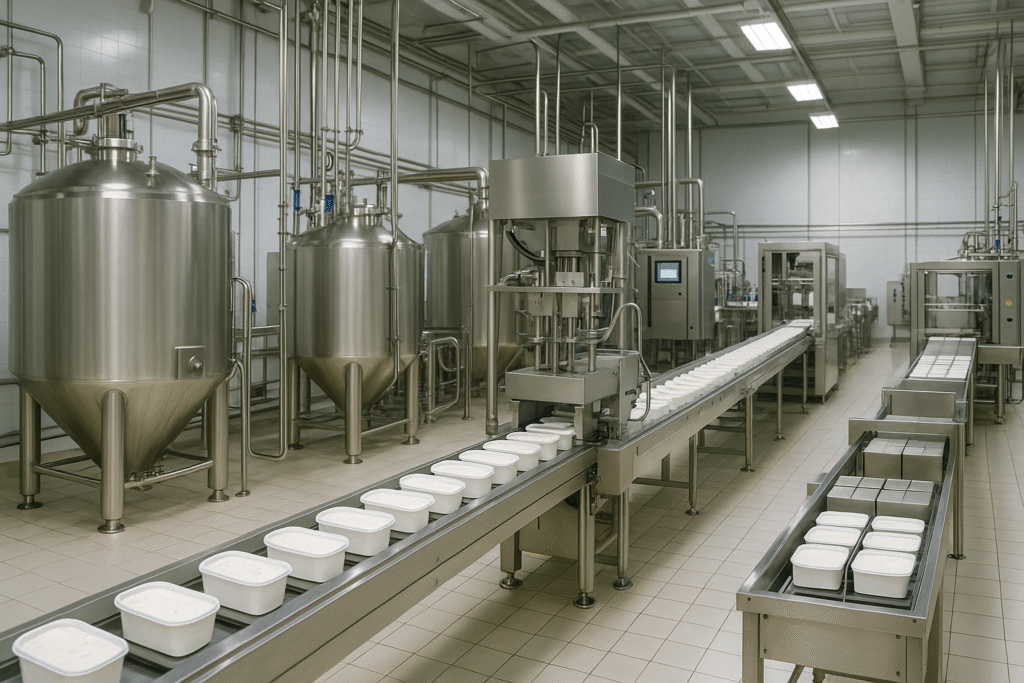
Manufacturing Volume and Reach
Creambell operates through:
- Manufacturing Facilities: 3 plants with combined capacity of 11.41 MLPM
- Plant Locations: Baddi (Himachal Pradesh), Goa, Asansol (West Bengal), Jammu, Mathura
- Geographic Coverage: 20 states and 2 union territories
- Distribution Network: 1,209 distributors, 77,834+ retailers
Product Range and Flavors
- Product Variety: 136 varieties catering to different age groups
- Popular Products: Sacch Mucch Aam, Royal Affair, Maxxum Mini range
- Format Options: Cups, sticks, bars, kulfis, tubs, large packs, cakes
- International Collaboration: Technical partnership with French dairy giant Candia
Unique Propositions
- Rapid Growth: One of India’s fastest-growing ice cream brands
- Innovation Focus: First to introduce premium Mini bars in India
- Quality Standards: ISO 9001:2008 and ISO 22000:2005 certified facilities
- Export Presence: International operations in Nepal and Africa
- RJ Corp Backing: Part of USD 1.4 billion RJ Corp diversified group
Marketing Methods
- Youth Targeting: Focus on millennial and Gen-Z consumer segments
- Digital Marketing: Strong online presence and social media campaigns
- Retail Expansion: Aggressive push cart and vending strategies
- Regional Campaigns: Customized marketing for different geographic markets
Showroom Reach
- Retail Outlets: 75,000+ stores across India
- Push Carts: 15,000 mobile vending units
- Geographic Presence: 19 states with plans for national expansion
- International Markets: Operations in African countries and Nepal
7. Hatsun Agro Product (Arun Ice Creams/Ibaco)
Market Position: Seventh position with 4.5% market share
Manufacturing Capacity: 100 tonnes per day at Zaheerabad facility
Annual Turnover: ₹6,396 crores (overall dairy operations)
Manufacturing Volume and Reach
Hatsun operates:
- Zaheerabad Plant: 100 tonne per day ice cream manufacturing capacity
- Additional Facilities: 3 ice cream plants total across South India
- Daily Production: 1.96 lakh kilograms across all facilities
- Milk Sourcing: 34 lakh litres daily from 400,000+ farmers
Product Range and Flavors
- Brand Portfolio: Arun Ice Creams, Ibaco premium range
- Product Variety: Cones, bars, cups, novelty products, ice cream shakes
- Flavors: Chocolate, strawberry, cotton candy, seasonal fruit options
- Innovation: Licks ice cream range for year-round consumption
Unique Propositions
- Integrated Dairy Model: Complete milk-to-ice cream value chain
- South India Focus: Strong regional presence in Tamil Nadu, Andhra Pradesh, Telangana
- Asia’s Largest Facility: Zaheerabad plant claims to be India’s largest ice cream unit
- Export Growth: International expansion to Singapore, Maldives, targeting Gulf countries
- Technology Integration: Advanced cold storage and processing capabilities
Marketing Methods
- Regional Marketing: Strong campaigns in South Indian markets
- Brand Portfolio Strategy: Different brands for different market segments
- Distribution Focus: Emphasis on HAP Daily outlet network
- Export Marketing: Targeting Indian diaspora in international markets
Showroom Reach
- HAP Daily Outlets: 3,600+ exclusive outlets across multiple states
- Geographic Presence: Strong in Tamil Nadu, Andhra Pradesh, Telangana, Karnataka
- Retail Distribution: 1.2 lakh retailers and 2,900+ direct distributors
- Expansion Markets: Maharashtra, Kerala, Odisha, West Bengal, Jharkhand
8. Naturals Ice Cream
Market Position: Premium segment player with growing market presence
Manufacturing Capacity: 25 tonnes per day (expanding to 50+ tonnes)
Annual Revenue: ₹300 crores (FY2020)
Manufacturing Volume and Reach
Naturals operates:
- Charkop Facility: Single production unit with 25 tonnes daily capacity
- Expansion Plans: New Panvel facility with double capacity under development
- Investment: ₹40 crores for new 5-acre facility in Panvel MIDC
- Supply Model: Daily fresh supply to all outlets ensuring quality
Product Range and Flavors
- Flavor Innovation: 125+ flavors with 20 available year-round
- Seasonal Specialties: Litchi, fig, jackfruit, muskmelon, watermelon
- Unique Offerings: Tender coconut, gajar halwa, kala jamun, black grapes
- Premium Focus: Real fruit-based ice creams without preservatives
Unique Propositions
- “Taste the Original”: Focus on authentic, natural ingredients
- Fruit-Based: Real fruits and milk as primary ingredients
- No Preservatives: 15-day shelf life emphasizing freshness
- Premium Positioning: Higher price points targeting urban consumers
- Word-of-Mouth Marketing: Less than 1% revenue spent on advertising
Marketing Methods
- Experiential Marketing: Store experience as primary marketing tool
- Word-of-Mouth: Reliance on customer recommendations and viral marketing
- Social Media: Growing digital presence targeting millennials
- Store Design: “Millennial-friendly” store redesigns in 2015
Showroom Reach
- Store Network: 140+ stores across 35+ cities
- Cloud Kitchens: 70+ delivery-only outlets
- Geographic Spread: 11 states including Maharashtra, Karnataka, Delhi-NCR
- Franchise Model: Mix of directly owned (18) and franchised stores (119)
9. Baskin Robbins
Market Position: Premium international brand with strong metro presence
Manufacturing Capacity: Own plant in Pune with dedicated production
Store Network: 750+ exclusive outlets across 200+ cities
Manufacturing Volume and Reach
Baskin Robbins operates:
- Pune Manufacturing: Dedicated facility producing for Indian and SAARC markets
- Graviss Foods Partnership: Manufacturing and distribution through local partner
- Quality Standards: International benchmarks with 100% vegetarian products
- Regional Coverage: Strong presence across major Indian cities
Product Range and Flavors
- Signature Concept: “31 flavors” – different flavor for each day of the month
- Flavor Bank: 100+ flavors in total portfolio
- Popular Products: World Class Chocolate, Strawberry Cheesecake
- Local Adaptations: Green Tea, Rum Raisin, and India-specific flavors
- New Launches: Italian Gelato range, Belgian chocolate milkshakes
Unique Propositions
- International Heritage: Global brand with premium positioning
- Flavor Innovation: Monthly introduction of new flavors
- All Vegetarian: 100% vegetarian products made from natural ingredient
- Premium Experience: Focus on quality and customer experience
- Global Standards: Consistent quality across all outlets
Marketing Methods
- Premium Branding: Emphasis on international heritage and quality
- Digital Marketing: Strong social media and online presence
- In-Store Experience: Focus on service and atmosphere
- Seasonal Campaigns: Regular promotional activities and new product launches
Showroom Reach
- Store Count: 750+ exclusive Baskin Robbins outlets
- Geographic Coverage: 200+ cities across India
- Location Strategy: Premium locations in malls, high-traffic commercial areas
- Franchise Model: Extensive franchise network with standardized operations
10. Gianis Ice Cream
Market Position: Legacy premium brand with strong North India presence
Manufacturing Capacity: Enhanced 7x capacity with new Sohna facility
Store Network: 250+ brand outlets across 10+ states
Manufacturing Volume and Reach
Gianis operates:
- Manesar Facility: Primary manufacturing unit with imported machinery
- Sohna Expansion: New facility increasing capacity seven-fold
- Technology: Imported machinery from US and Italy for premium quality
- Regional Focus: Strong manufacturing and distribution in North India
Product Range and Flavors
- Heritage Flavors: Traditional rabri-faluda, mango shakes, desi ghee halwa
- Modern Range: 100+ gourmet flavors, sundaes, gelatos, sorbets
- Health Options: No added sugar variants, protein (whey) gelato
- Premium Products: Falooda, kulfi, thick shakes, ice cream cakes
Unique Propositions
- Heritage Brand: 66+ years legacy since 1956
- Premium Quality: Focus on authentic taste and premium ingredients
- Artisanal Approach: Traditional methods combined with modern technology
- Regional Loyalty: Strong brand recognition in North India
- “Whey to Go”: Healthy ice cream brand portfolio
Marketing Methods
- Heritage Marketing: Leveraging historical brand value and legacy
- Regional Campaigns: Strong focus on North Indian markets
- Premium Positioning: Emphasis on quality and authentic taste
- Expansion Strategy: Aggressive growth plans including international markets
Showroom Reach
- Brand Outlets: 250+ stores across India with UAE presence
- Company vs Franchise: 25 company-owned, 225+ franchise outlets
- Retail Distribution: 400+ retail outlets beyond exclusive stores
- Expansion Plans: Target of 100+ new stores annually
Market Trends and Future Outlook
The Indian ice cream industry is poised for significant growth driven by several key trends:
Consumer Behavior Changes
- Health Consciousness: Growing demand for organic, sugar-free, and probiotic variants
- Premium Segmentation: Increasing preference for artisanal and premium ice creams
- Convenience: Rise of online ordering and quick commerce platforms
- Flavor Innovation: Demand for exotic and fusion flavors combining global and local tastes
Technological Advancements
- Cold Chain Improvements: Better logistics enabling reach to smaller towns
- Manufacturing Technology: Advanced freezing and packaging systems
- Digital Integration: E-commerce platforms and delivery apps expanding market reach
- Quality Control: Enhanced testing and quality assurance systems
Regional Expansion
The industry is experiencing rapid expansion from metro cities to tier-2 and tier-3 towns, driven by improving infrastructure and rising disposable incomes. Companies are increasingly focusing on:
- Rural Penetration: Affordable products for emerging markets
- Regional Flavors: Locally adapted products for different regions
- Distribution Networks: Expanding cold chain and retail presence
- Franchise Models: Growth through partnership and franchise operations
Conclusion
India’s ice cream industry presents a dynamic landscape with established players like Amul and Kwality Walls leading the market while innovative brands like Naturals and regional players like Havmor continue to capture consumer attention. The industry’s growth trajectory, supported by improving infrastructure, changing consumer preferences, and increasing urbanization, positions it for continued expansion.
The sector’s evolution from traditional kulfi vendors to sophisticated manufacturing operations reflects India’s broader economic transformation. With sustainability initiatives gaining momentum and technology driving efficiency improvements, the industry is well-positioned to serve India’s growing appetite for frozen desserts while maintaining quality and innovation standards.
As the market continues to mature, successful manufacturers will be those who can balance traditional Indian tastes with global quality standards, maintain efficient cold chain operations, and adapt to changing consumer preferences while building strong distribution networks across India’s diverse geographic and demographic landscape.
The data and insights in the baove research article has been collected from various sources and collaited for better understanding of the Ice Cream Market in India.